

Article
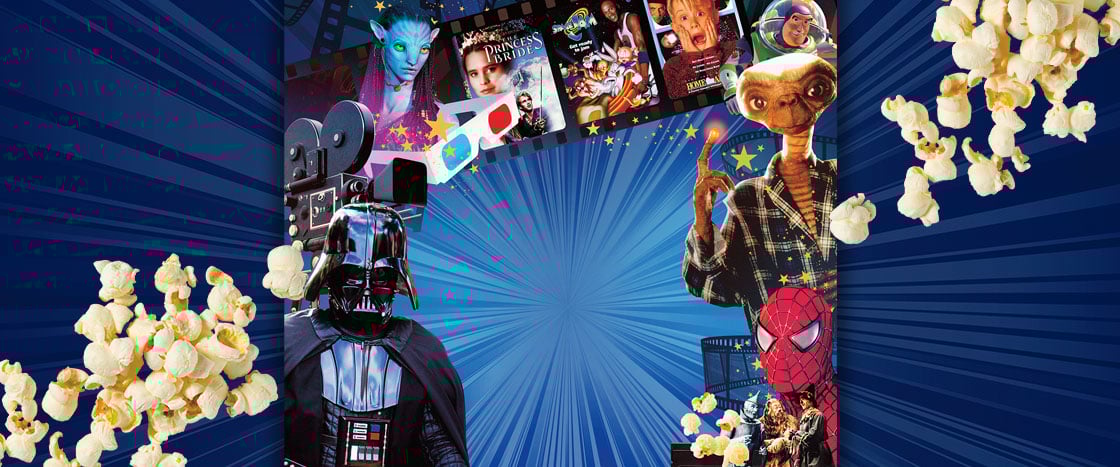
Illustration by Sean McCabe; iStockPhoto/Getty Images (Camera, VHS Tapes, Popcorn Bucket, Popcorn); subjug/Getty Images (3D Glasses); BluIz60/Getty Images (Darth Vader); Unique Nicole/Getty Images (Avatar); Mark Sennet/Getty Images (ET); Shutterstock.com (Blockbuster Video, Film Strips); © 20TH CENTURY FOX/Cinematic/Alamy Stock Photo (The Princess Bride); BFA/Warner Bros/Alamy Stock Photo (Space Jam); © 20TH CENTURY FOX/SilverScreen/Alamy Stock Photo (Home Alone); © PIXAR/DISNEY/Maximum Film/Alamy Stock Photo (Toy Story); © Sony Pictures/RGR Collection/Alamy Stock Photo (Spider-Man); FlixPix/MGM/Alamy Stock Photo (Wizard of Oz)

The Magical History of Movies

The fascinating story of how this beloved form of entertainment has changed over time

By Anna Starecheski
From the March/April 2026 Issue

Learning Objective: Students will find the connections between two texts and respond to a writing prompt.

Lexile: 600L-700L, 700L-800L
Featured Skill: Connecting Texts

Standards

Story Navigation

Download and Print
THINK & READ

As you read, notice how movie watching has changed over time.

The Magical History of Movies

The fascinating story of how this beloved form of entertainment has changed over time

Imagine it’s 1907. Your family is going to the movies for the very first time. You head to a theater, called a nickelodeon, and pay five cents to get in.

You’re so excited to see the movie everyone is talking about: The Great Train Robbery. When it starts, you gasp. Two robbers burst into a train station on-screen. The movie is in black-and-white and has no sound. But a live piano player plays fast, exciting music. 

Twelve minutes later, the movie is over. The crowd goes wild. You can’t wait to see it again!

Imagine it’s 1907. Your family is going to the movies for the first time. You go to a theater, called a nickelodeon. It costs five cents to get in.

You’re excited to see the movie everyone is talking about. It’s called The Great Train Robbery. It starts, and you gasp. On the screen, two robbers burst into a train station. The movie is in black-and-white. It has no sound. But a live piano player plays fast, exciting music.

Twelve minutes later, the movie is over. The crowd goes wild. You can’t wait to see it again!

A Night at the Nickelodeon

A Night at the Nickelodeon

This might not sound exciting today. But in the early 1900s, the technology to create movies was brand-new. 

The first movies didn’t have color or sound. And movies were short—usually around 15 minutes long. So a night at the nickelodeon included other entertainment. Singers, dancers, and comedians performed too.

The first nickelodeon opened in Pittsburgh, Pennsylvania, in 1905. The low price meant that almost anyone could join the fun. Millions of Americans went to experience the magic of movies. By 1910, there were 10,000 nickelodeons throughout the United States. 

But something even bigger was coming.

This might not sound exciting today. But this was the early 1900s. The technology to make movies was very new.

The first movies didn’t have color or sound. They were short, usually around 15 minutes long. So a night at the nickelodeon had other entertainment. Singers, dancers, and comedians performed.

The first nickelodeon opened in Pittsburgh, Pennsylvania in 1905. The low price meant that almost anyone could go. Millions of Americans went to enjoy the magic of movies. By 1910, there were 10,000 nickelodeons in the United States.

But something even bigger was coming.

Shutterstock.com

Fancy movie palaces, like this one in Iowa, were among the first theaters where viewers could enjoy movies.

The Movie Palace

The Movie Palace

In 1914, a theater called the Strand opened in New York City. It was the first theater built just for watching movies. This luxurious “movie palace” had 3,300 velvet seats. It was decorated with expensive marble and gleaming gold. There, you could see longer movies. A full group of musicians played along with the films.

The Strand was an instant hit. By 1916, there were more than 21,000 movie theaters in the U.S. Many of these new theaters were fancy. But going to them was cheaper than seeing a play. Americans loved the experience of going out for a night of entertainment. 

In 1914, a theater called the Strand opened in New York City. It was the first theater built just for watching movies. This luxurious “movie palace” had 3,300 seats. It was decorated with expensive marble and gold. You could see longer movies there. And a group of musicians played along with the films.

The Strand was an instant hit. By 1916, there were more than 21,000 movie theaters in the U.S. Many of these new theaters were fancy. But going to them was cheaper than seeing a play. Americans loved going out for a night of entertainment.

More Popular

More Popular

Then, in 1929, the Great Depression hit. That was a period of time when, for about 10 years, many Americans were poor and without jobs. Everyone was trying to spend less money. But people still wanted to go to the movies. It was a distraction from the hard realities of life. 

Movie theaters came up with creative ways to keep people coming. They started offering popcorn. They lowered prices on certain nights. Some theaters even gave away a free plate to every woman who bought a ticket. 

As a result, movies became more popular than ever. Technology also improved. By the early 1930s, most films had sound. More and more movies came out in color. 

But once again, big changes were on the way.

Then, in 1929, the Great Depression hit. That was a period of time when many Americans were poor and without jobs. It lasted for about 10 years. Everyone was trying to spend less money. But people still wanted to go to the movies. It took their minds off of how hard life was.

Movie theaters came up with creative ways to keep people coming. They started offering popcorn. Ticket prices were lower on certain nights. Some theaters even gave a free plate to every woman who bought a ticket.

As a result, movies became more popular than ever. Technology also improved. By the early 1930s, most films had sound. More and more movies were in color.

But once again, big changes were on the way.

Movies at Home

Movies at Home

Shutterstock.com

Starting in the late 1930s, new inventions brought movies into people’s homes. First came televisions. Movies were played on TV at certain times. People could tune in to watch from the comfort of their couches! 

Then, in 1977, came VHS tapes. You could pop a tape into a machine and play a movie on your TV. People could now choose what movies to watch and when to watch them. Families visited video rental stores, like Blockbuster. Kids excitedly walked up and down the aisles to pick out which VHS tapes to watch at home. 

Soon VHS tapes were replaced by discs called DVDs. By 1997, a company named Netflix had started a service that let people rent DVDs by mail. People loved getting movies delivered to their homes!

Starting in the late 1930s, new inventions let people watch movies at home. First came televisions. Movies were played on TV at certain times. People could watch from their comfy couches!

Then, in 1977, came VHS tapes. You could put a tape into a machine and play a movie on your TV. People could now choose what movies to watch. They could also choose when to watch them. Families visited video rental stores, like Blockbuster. Kids walked up and down the aisles picking which VHS tapes to watch at home. 

Soon VHS tapes were replaced by discs called DVDs. By 1997, a company called Netflix had started a new service. It let people rent DVDs by mail. People loved getting movies sent to their homes!

Many Options

Many Options

In 2007, Netflix changed how we watched movies again. It launched a video streaming service. Streaming technology let movie lovers pick a film and watch it on any device that uses the internet. 

Soon many other streaming services appeared, like Disney+ and Hulu. All of a sudden, choosing a movie to watch involved hundreds—even thousands—of options. 

Even so, Americans still flocked to movie theaters. That changed in 2020, when the Covid-19 pandemic hit. Suddenly, everyone had to stay home to avoid getting sick. Streaming was the only way to see a movie. 

Hundreds of movie theaters closed down for good. New movies were released directly to streaming. People wondered, Is this the end of the big screen?

In 2007, Netflix changed how we watched movies again. It started a video streaming service. Streaming technology let people pick a movie and watch it on any device that uses the internet. 

Soon many other streaming services appeared, like Disney+ and Hulu.
Suddenly, people could choose almost any movie they wanted to watch. There were hundreds or even thousands of options. 

Even so, Americans still went to movie theaters. That changed in 2020, when the Covid-19 pandemic hit. Suddenly, everyone had to stay home to avoid getting sick. Streaming was the only way to see a movie.

Hundreds of movie theaters closed down for good. New movies were released right to streaming. People wondered: Is this the end of the big screen?

The Magic of Movies

The Magic of Movies

Shutterstock.com

A Smurfs popcorn bucket

Not quite. But theaters have had to try new things to get people to come back. Many replaced their old seating with comfy recliners. Others added video game arcades, laser tag, and bowling alleys. Some even offer collectible popcorn buckets to go with hit movies!

Today Americans are still in love with the magic of movies. Some prefer to watch them from the comfort of their homes. Others love the experience of seeing a new movie released on the big screen. Which do you prefer?

Not quite. But theaters have had to try new things to get people to come back. Many got rid of their old seating. They put in comfy recliners instead. Others added video game arcades, laser tag, and bowling alleys. Some even offer collectible popcorn buckets to go with hit movies!

Today Americans are still in love with the magic of movies. Some want to watch them from the comfort of their homes. Others love seeing a new movie on the big screen. Which do you prefer?

Movies Through Time 

This timeline shows some important events in the history of movies

Pictorial Press Ltd/Alamy Stock Photo (Wizard of Oz); Underwood Archives/Getty Images (Nickelodeon); 360b/Alamy Stock Photo (Netflix); Shutterstock.com (All Other Images)

1905

1905

The first movie theaters, called nickelodeons, open across the U.S. They show short black-and-white movies with no sound. A ticket costs only five cents, or a nickel. (That’s where the name nickelodeon comes from!)

The first movie theaters, called nickelodeons, open in the U.S. They show short black-and-white movies. There’s no sound. A ticket costs only five cents, or a nickel. (That’s where the name nickelodeon comes from!)

1930s

1930s

More films have sound and are made in color instead of black-and-white. In 1939, The Wizard of Oz wows audiences with its bright yellows, reds, and greens.

More films have sound. They’re made in color instead of black-and-white. In 1939, The Wizard of Oz wows audiences with its bright yellows, reds, and greens!

1980s

1980s

More and more people start watching movies at home on their TVs using VHS tapes. The tapes are later replaced by thin discs called DVDs.

More and more people watch movies at home on their TVs using VHS tapes.
VHS tapes are later replaced by thin discs called DVDs.

2007

2007

Netflix starts streaming movies. Viewers can now watch films using the internet! Soon other streaming services launch.

Netflix starts streaming movies. People can now watch films using the internet! Soon other streaming services start.

TODAY

TODAY

Thanks to smartphones and tablets, you can watch movies from anywhere. But some people still prefer to watch movies at the theater on a big screen!

Smartphones and tablets let you watch movies from anywhere. But some people still prefer movies at the theater!

Think & Write

What has been the biggest change in how we watch movies today compared with in the past? Use details from both texts.

Think & Write

What has been the biggest change in how we watch movies today compared with in the past? Use details from both texts.

This article was originally published in the March/April 2026 issue.

This article was originally published in the March/April 2026 issue.

video (1)
Audio ()
Activities (4)
Quizzes (1)
Answer Key (1)
video (1)
Audio ()
Activities (4) Download All Activities
Quizzes (1)
Answer Key (1)
Text-to-Speech