


Article
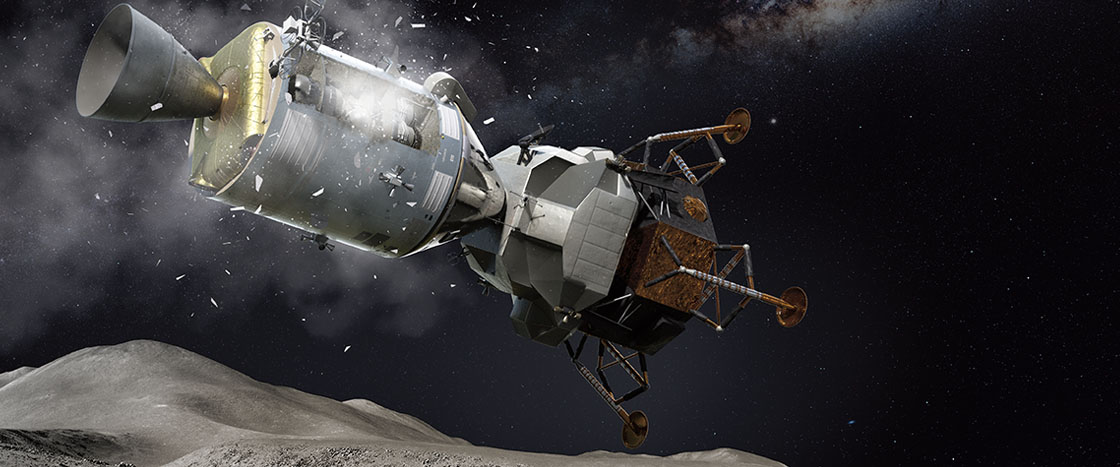
Art by Gary Hanna

Stranded in Space

The incredible true story of three astronauts fighting for survival 240,000 miles from Earth

By Lauren Tarshis
From the February 2026 Issue

Learning Objective: Students will identify problems and solutions in a narrative nonfiction article about the famous Apollo 13 mission.

Lexile: 700L-800L, 600L-700L
Featured Skill: Problem and Solution

Standards

Story Navigation

Download and Print
UP CLOSE: Problem and Solution

As you read, look for the huge problem three astronauts faced and how they solved it.

Stranded in Space

The three astronauts of Apollo 13 were doomed.

That’s how it seemed on April 13, 1970.

Astronauts Jim Lovell, Fred Haise, and Jack Swigert were speeding through space when a violent explosion rocked their spacecraft. The blast tore apart one side of their ship. Within minutes, half their oxygen supply had bled out, and the ship’s power was draining fast. 

Without power and oxygen, the astronauts soon would be unable to breathe. And they would be stranded—lost in the forever blackness of space. 

Apollo 13 was supposed to be a research mission to the moon. Now it would be a fight for survival hundreds of thousands of miles from Earth.

The three astronauts of Apollo 13 were doomed.

That’s how it seemed on April 13, 1970.

Astronauts Jim Lovell, Fred Haise, and Jack Swigert were speeding through space when something went wrong. A part of their ship exploded. They lost half of their oxygen within minutes. The ship started to lose power.

Without power and oxygen, the astronauts would not be able to breathe. And they would be stranded, lost in the darkness of space. 

Apollo 13 was supposed to be a research mission to the moon. Now it was a fight to stay alive hundreds of thousands of miles from Earth.

Alamy Stock Photo

THE LAUNCH

Apollo 13 lifts off for the moon on April 11, 1970. 

A Mission to the Moon

A Mission to the Moon

Two days earlier, Apollo 13 had launched from Florida’s Kennedy Space Center. The three astronauts were strapped inside the small spacecraft, which was on top of a 360-foot-tall rocket. 

Five, four, three, two, one . . .

With a deafening roar, the rocket shot Apollo 13 into the sky. It streaked through the air at 24,000 miles per hour—about 40 times the speed of a plane. The force made the astronauts’ hearts race. It stretched back the skin on their faces until it seemed the skin would rip away from their skulls. The men felt as though their bones might shatter. 

But this was normal. In fact, the launch was just about perfect. 

Soon the astronauts were on their way to the moon. The 240,000-mile journey would take three days, and it would not be a comfortable ride. 

The astronauts were crammed into Apollo 13’s command module. This car-sized area—nicknamed Odyssey—was also where the men lived and slept. Meals were pouches of dried food, prepared by adding warm
water and mixing for three minutes. There were no showers, no sinks, no toilets. The astronauts had to pee and poop into bags. The bags with pee were released into space through a hatch. The bags with poop would be brought back to Earth. (They had chemicals that prevented smells!) 

And, of course, there was no gravity to hold the astronauts—or anything else—down. Floating in their jumpsuits, the men looked like big fish stuck in a tiny tank. 

But Lovell, Haise, and Swigert were thrilled and honored to be on this mission, and confident they would succeed. 

After all, they had a team of brilliant engineers supporting them back at Mission Control in Houston, Texas. Like watchful parents, these engineers monitored every detail of the flight, from the ship’s position in space to each astronaut’s heartbeat. The astronauts and Mission Control stayed in constant contact.

Two days into the journey, the mission seemed flawless. There was no sign of the catastrophe to come.

Two days before the explosion, Apollo 13 had launched from Florida’s Kennedy Space Center. The small spacecraft was on top of a 360-foot-tall rocket.

Five, four, three, two, one . . . 

The rocket shot Apollo 13 into the sky. It soared through the air at 24,000 miles per hour. That’s about 40 times the speed of a plane. The force made the astronauts’ hearts race. It pulled back the skin on their faces. The three men felt like their bones might break.

But this was normal. The launch was almost perfect. 

The astronauts were on their way to the moon. The 240,000-mile journey
would take three days. It would not be comfortable.  The astronauts were packed into Apollo 13’s command module. This car-sized area was nicknamed Odyssey. It was where the men lived. Their meals were packets of dried food mixed with warm water. There were no showers, no sinks, no toilets. The astronauts had to pee and poop into bags. The bags with pee were let out into space. The bags with poop would be brought back to Earth. (These bags had chemicals that stopped smells!) 

There was no gravity to keep the astronauts, or anything else, down on Apollo 13. The floating men looked like big fish in a tiny tank. 

But Lovell, Haise, and Swigert were confident about their mission. 

After all, they had a team of brilliant engineers helping them back at Mission Control. This was in Houston, Texas. The engineers watched every detail, from the ship’s location in space to each astronaut’s heartbeat. The astronauts and Mission Control were always in contact. 

During the first two days of their journey, everything seemed OK. There was no sign of the catastrophe to come.

Bettmann Archive/Getty Images

THE ASTRONAUTS

From left to right: Jack Swigert, Jim Lovell, and Fred Haise.

A Space Race

A Space Race

Only 15 years before the launch of Apollo 13, the idea of humans traveling through space was the stuff of science fiction. But by the early 1960s, both America and Russia were racing to be the first to put a human
in space. 

Leading America’s efforts was a new government agency called the National Aeronautics and Space Administration (NASA). NASA hired hundreds of bright scientists and engineers. They perfected rockets powerful enough to blast away from Earth. They designed new aircrafts. And they began training astronauts. 

The space program became a source of huge pride to Americans. And there was no moment more triumphant than when U.S. astronaut Neil Armstrong became the first human on the moon, on July 20, 1969. Some 600 million people around the world watched their TVs in amazement
as Armstrong’s boot made its mark on the moon’s sandy surface.

In the months after Armstrong’s historic step, however, something unexpected happened: Many Americans lost interest in space travel. After a decade with dozens of successful missions, space travel had come to seem rather . . . boring.

That is until, almost 56 hours into the Apollo 13 mission, disaster struck.

Just 15 years before the launch of Apollo 13, people thought space travel was not possible. But by the early 1960s, both America and Russia were racing to send the first human into space. 

A new government agency called the National Aeronautics and Space Administration (NASA) led America’s space program. NASA hired hundreds of scientists and engineers. They made rockets powerful enough to blast away from Earth. They designed new aircrafts. And they began training astronauts. 

Americans were proud of the space program. The most triumphant moment was when U.S. astronaut Neil Armstrong became the first human on the moon. It was on July 20, 1969. About 600 million people around the world watched their TVs as Armstrong stepped onto the moon. 

But after a decade with dozens of successful missions, space travel started to feel boring to Americans. Then came the Apollo 13 disaster. 

Illustration by Kate Francis

THE PARTS OF APOLLO 13


1. The service module held most of the ship’s electric power and oxygen. It was the site of the explosion.

2. The command module was named Odyssey. The astronauts lived and slept here. Because it had a heat shield, it was the only part of the ship that could return the men safely to Earth.

3. The lunar module (LM) was built to carry the astronauts from Odyssey to the moon and back. It had its own supply of oxygen and power—but no heat shield.

An Explosion

An Explosion

On April 13, 1970, Lovell, Haise, and Swigert were preparing for the moon landing, which was about a day away. To get to the moon’s surface, they would use a second spacecraft: the lunar module (called LM for short). The LM and Odyssey were latched together like LEGO® bricks. When Apollo 13 arrived near the moon, the LM would separate from the rest of the ship and carry the astronauts to and from the moon’s surface. 

The astronauts had just finished checking the LM when Mission Control asked them to perform a simple task: Turn on the fans inside the oxygen tanks. With a flip of a switch, Swigert completed the job. 

Seconds later, there was a loud bang. The spacecraft moaned and shuddered.  

“Houston, we’ve had a problem,” Lovell said. 

In fact, it was a catastrophe. 

At first, nobody knew what had happened. Lovell believed a meteoroid, or small space rock, had hit them. Actually, there had been an explosion in an oxygen tank. The blast drained Odyssey’s power and sent oxygen leaking into space. Within hours, there would be no air left to breathe, and everyone on board would be dead. 

News of the accident spread around the world. Few believed the astronauts would survive. But aboard Apollo 13, there was no time to despair. The three men knew rule number one in an emergency is to focus on the problem. Worry and panic do not get you closer to a solution. And so the astronauts got to work. 

On April 13, 1970, Lovell, Haise, and Swigert got ready for their moon landing. It was about a day away. To reach the moon, they would use a second spacecraft, called the lunar module, or LM. The LM and Odyssey were connected like LEGO® bricks. When Apollo 13 arrived near the moon, the LM would separate from the rest of the ship. It would carry the astronauts to the moon and back. 

The astronauts had just finished checking the LM. Then Mission Control told them to turn on the fans inside the oxygen tanks. Swigert flipped a switch to turn on the fans. 

Seconds later, there was a loud bang. 

“Houston, we’ve had a problem,” Lovell said. 

In fact, it was a catastrophe. 

At first, nobody knew what happened. Lovell believed a meteor, or a small space rock, had hit them. Actually, there had been an explosion in an oxygen tank. Odyssey lost much of its power and oxygen. Within hours, there would be no air left to breathe. Everyone on board would be dead. 

News of the accident spread around the world. Few believed the astronauts would live. But on Apollo 13, there was no time to panic. The men knew the first rule during an emergency was to focus on the problem. So they got to work. 

NASA via CNP/Newscom

MISSION CONTROL

From this room in Houston, Texas, engineers guided the Apollo 13 astronauts home.

Scanning the Sky

Scanning the Sky

At Mission Control in Houston, flight director Gene Kranz gathered his engineers. These men knew Apollo 13’s systems better than they knew their own bedrooms. It was clear that the ship was too damaged to continue to the moon. Instead, the astronauts would need to return home right away. Soon both Kranz’s team and the astronauts had come up with the same idea: to move to the LM to survive. 

The LM had its own power, oxygen, and water. The astronauts would climb into the LM and stay there until they got close to Earth. But as they passed through Earth’s atmosphere, the LM would get too hot. So the men would have to scramble back into Odyssey before then. (Odyssey had a heat shield to protect them.) 

The astronauts had barely settled into the LM when a new problem cropped up. The journey home would take four days, but the LM didn’t have enough power or water to last that long. So the astronauts turned off all but the most critical systems, including the heat. Outside, the temperature was 280 degrees Fahrenheit below zero. Soon the men were shivering. 

But the cold was the least of their worries. 

Every minute, it seemed, new problems arose. The ship kept drifting off course. The LM’s air filters stopped working. So the air became filled with carbon dioxide. Too much of this gas is toxic to humans. 

With many systems damaged or powered down, the engineers had to use their ingenuity to find creative solutions. The days passed. The astronauts barely slept. Neither did the NASA engineers in Houston. Meanwhile, people on Earth scanned the sky. Would the astronauts make it home? 

At Mission Control in Houston, flight director Gene Kranz gathered his engineers to help. The ship was too damaged to go to the moon. The astronauts had to return home right away. Soon both Kranz’s team and the astronauts had the same idea: move into the LM to survive. 

The LM had its own power, oxygen, and water. The astronauts would climb into the LM and stay there until they got close to Earth. But as they passed through Earth’s atmosphere, the LM would get too hot. So the men would have to move back to Odyssey before then. (Odyssey had a heat shield to protect them.) 

The trip home would take four days. But the LM didn’t have enough water or power to last that long. So the astronauts turned off most systems, even the heat. Outside, the temperature was 280 degrees Fahrenheit below zero. Soon the men
were shivering. 

Every minute, new problems seemed to come up. The ship kept drifting off course. The LM’s air filters broke, and carbon dioxide filled the air. Too much of this gas is dangerous for people. 

The engineers had to use their ingenuity to find solutions. Days passed. The astronauts barely slept. Neither did the NASA engineers in Houston. Meanwhile, people on Earth scanned the sky. Would the astronauts make it home?

Free Fall to Earth

Free Fall to Earth

On the morning of April 17, the astronauts climbed into Odyssey and got ready for their plunge back to Earth. It was the most dangerous part of their journey. 

What if Odyssey’s heat shield had been damaged in the explosion? The ship would burn up. And what if the parachutes wouldn’t open? The astronauts needed them to land safely. 

The world would know the fate of Apollo 13 in four minutes. For that period of time, as the ship dropped to Earth, the astronauts and Mission Control would be unable to talk to each other. 

“Gentlemen,” Lovell said. “We’re about to reenter. I suggest you get ready for a ride.”

The men tightened their seat belts as Odyssey began its free fall to Earth. Through the small windows, all they could see was fiery red. 

At Mission Control, the command room was packed with engineers and visitors. The room was completely silent. The minutes ticked by with agonizing slowness. 

One minute. 

Two minutes. 

Three minutes. 

Four minutes . . . 

Joe Kerwin in Mission Control tried to make contact. “Odyssey, Houston standing by, over.”

Nothing.

“Try again,” Kranz barked.

Odyssey, Houston standing by, over.”

Still nothing. 

Five minutes. 

Some engineers fought back tears. 

Then a voice crackled over the radio. 

“OK, Joe,” said Swigert.

At Mission Control, joy and relief flooded the entire room. Kranz pumped his fist in the air. 

Inside Odyssey, the astronauts watched the sky outside the windows turn from angry red to soft pink and finally to peaceful blue. Their speed slowed as the air thickened.

Pop! Odyssey’s parachutes opened. 

The ship floated down to Earth like a feather. It landed in the warm waters of the Pacific Ocean. 

The Apollo 13 mission was over. It was a failed mission. But it would go down in history as one of NASA’s greatest successes because everybody returned safely. 

Lovell looked at Haise and Swigert. “Fellows,” he said, “we’re home.”

On the morning of April 17, the astronauts climbed into Odyssey and got ready to return to Earth. It was the most dangerous part of their journey. 

What if Odyssey’s heat shield had been damaged in the explosion? The ship would burn up. And what if the parachutes wouldn’t open? The astronauts needed them to land safely. 

The world would know the fate of Apollo 13 in four minutes. During that time, the ship would be dropping to Earth. And the astronauts wouldn’t be able to talk with Mission Control. 

“Gentlemen,” Lovell said. “We’re about to reenter. I suggest you get ready for a ride.”

The men tightened their seatbelts as Odyssey began to fall to Earth. 

At Mission Control, the command room was packed with engineers and visitors. The room was completely silent. The minutes ticked by with agonizing slowness. 

One minute. 

Two minutes. 

Three minutes. 

Four minutes . . . 

Joe Kerwin in Mission Control tried to make contact. “Odyssey, Houston standing by, over.” 

Nothing. 

“Try again,” Kranz barked. 

Odyssey, Houston standing by, over.” 

Still nothing. 

Five minutes. 

Some engineers fought back tears. 

Then a voice came over the radio. 

“OK, Joe,” said Swigert. 

At Mission Control, joy and relief filled the room. Kranz pumped his fist in the air. 

Inside Odyssey, the astronauts watched the sky outside the windows turn from fiery red, to soft pink, to peaceful blue. 

Pop! Odyssey’s parachutes opened. 

The ship floated down to Earth like a feather. It landed in the Pacific Ocean. 

The Apollo 13 mission was over. It was a failed mission. But it would go down in history as one of NASA’s greatest successes because everybody returned safely. 

Lovell looked at Haise and Swigert. 

“Fellows,” he said. “We’re home.” 

Bettmann Archive/Getty Images

THE LANDING

A Navy diver helps the Apollo 13 astronauts (in white uniforms) moments after they landed in the Pacific Ocean.

Write Now

The Apollo 13 mission was called a “successful failure.” Why is this a good way to describe it? Write a three-paragraph essay that explains what the mission was, what went wrong, and why it was still a success. Use details from the article in your response.

Write Now

The Apollo 13 mission was called a “successful failure.” Why is this a good way to describe it? Write a three-paragraph essay that explains what the mission was, what went wrong, and why it was still a success. Use details from the article in your response.

Play Know the Words Game

This article was originally published in the February 2026 issue.

This article was originally published in the February 2026 issue.

video (1)
Games (1)
Slideshows (1)
Audio ()
Activities (7)
Quizzes (1)
Answer Key (1)
video (1)
Games (1)
Slideshows (1)
Audio ()
Activities (7) Download All Activities
Quizzes (1)
Answer Key (1)
Text-to-Speech