
Thousands of years ago, people told stories to explain the world around them. We call these very old stories myths. There are many myths from all over the globe. The myth you’re about to read is from ancient Rome. This civilization—a highly advanced and organized society—existed more than 2,000 years ago.
Back to Teacher View
Student View
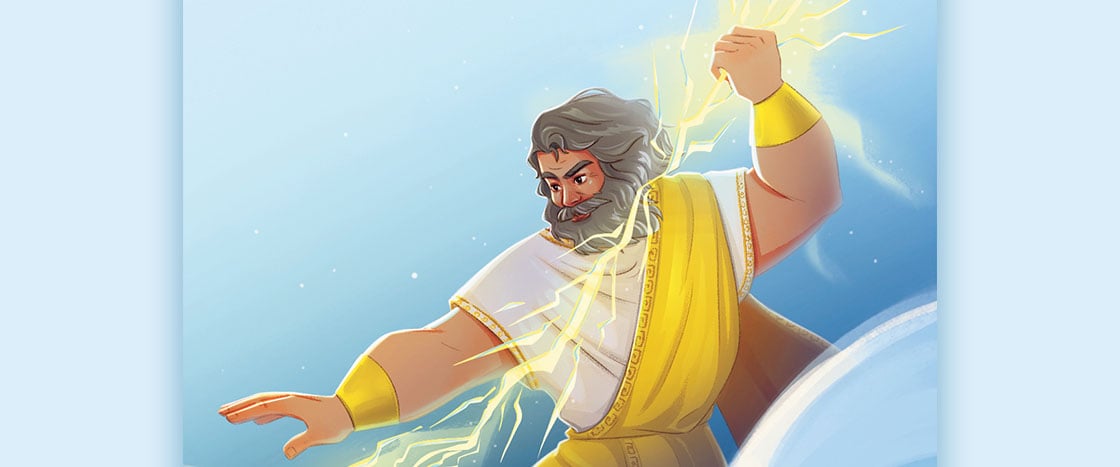
Art by Laura Catrinella
What Is a Myth?
You’re going to read a play that’s based on a myth from long ago. Here are four facts you should know first.

By Laine Falk
From the September 2026 Issue
Learning Objective: Students will read a short informational text to build knowledge about a topic.

1. A myth is an old story.
2. Many myths feature gods and goddesses.
Gods and goddesses often play a big role in myths. They each have their own powers and personalities. In myths from ancient Rome, Jupiter is the king of all gods. He makes lightning and thunder. He can be moody. Flora, the goddess of flowers, is friendly to humans.
3. You’ll meet many other types of characters.
Heroes, monsters, and regular people also appear in myths. Animals are often important characters too. Animals in myths can have humanlike traits, such as honesty and confidence. In one myth from ancient Rome, a kindhearted wolf helps raise twin boys.
4. Myths often explain nature.
Why does the sun shine? Why are there waves in the ocean? Long ago, people didn’t have the answers. Myths often offered explanations for how these things came to be. The myth you’re about to read also explains something about the natural world. It has to do with honeybees! Are you ready to read the play?
Read the play “The Bee and the Gods.”
This story was originally published in the September 2026 issue.
Audio
()
Audio
()

Text-to-Speech