

Article
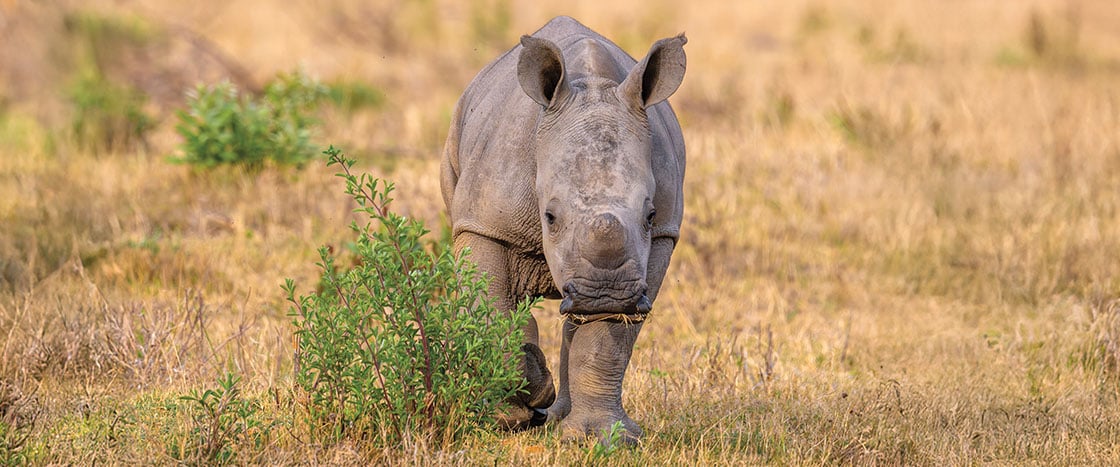
A baby rhino in South Africa (Credit: Shutterstock.com)

How to Save a Baby Rhino

A little rhino was hurt and alone. Could a friendly sheep change her life?

By Talia Cowen
From the September 2026 Issue

Learning Objective: Students will identify the main idea and supporting details in a narrative nonfiction article.

Lexile: 500L-600L, 600L-700L

Standards

Download and Print

A baby rhino lay still in the middle of a grassy field. She was cold and hungry. Her breathing was slow. Her heartbeat was weak. 

It was July 2022, and the 3-month-old white rhino was in serious danger. 

White rhinos often live in groups. The adult rhinos take care of the young. Mothers feed their babies milk. When it’s time to rest, the little rhinos cuddle with their mothers for warmth. And if lions are nearby? Adult rhinos defend the young ones with a built-in weapon: a sharp horn longer than your arm.   

But this baby rhino was all alone in the wilderness of South Africa. She didn’t have an adult rhino to protect her. She could be attacked by lions at any moment. And if she wasn’t fed milk soon, she would starve to death.

Would the baby rhino survive?

A baby rhino lay still in a grassy field. She was cold and hungry. 

Her breathing was slow. Her heartbeat was weak. It was July 2022 in South Africa. The 3-month-old white rhino was in danger.

White rhinos usually live in groups. Adult rhinos care for the young. Mothers feed their babies milk. Baby rhinos sleep close to their mothers. If lions are near, adult rhinos protect the young ones. 

But this baby rhino was alone. She didn’t have an adult rhino to protect her. And if she was not fed milk soon, she would die of hunger.

Would the baby rhino survive?

Jim McMahon/Mapman ®

“Almost Too Late”

“Almost Too Late”

Thankfully, a group of rangers discovered the little rhino. They rushed her to the nearby Shamwari Wildlife Rehabilitation Center. That’s a place where experts rehabilitate sick and injured animals before releasing them back into the wild.

At the center, caretakers worked around the clock to save the rhino’s life. “It was almost too late,” says Lisa Strauss, one of the caretakers. 

They bundled the baby rhino in warm blankets. They fed her a bottle of milk every two hours. They took turns sleeping next to her so she wouldn’t feel alone. They also gave her a name: Ntombi (n-TOHM-bee). It means “young girl” in Zulu, a language spoken in South Africa.

Three days later, Ntombi lifted her head and opened her sparkling black eyes. She was going to live!

But Strauss and the other caretakers knew that her recovery was just beginning. To heal, Ntombi needed to feel safe and loved. What could help? Having a friend by her side. 

“No injured, scared baby animal ever wants to be alone,” says Strauss. “A little bit of friendship makes getting better a whole lot less scary.”

Thankfully, a group of rangers found the little rhino. They rushed her to Shamwari Wildlife Rehabilitation Center. That’s a place where experts rehabilitate sick and hurt animals. When the animals get better, they
are returned to the wild. 

At the center, caretakers worked to save the rhino. “It was almost too late,” says Lisa Strauss. She’s one of the caretakers. 

They wrapped the baby rhino in blankets. They fed her a bottle of milk every two hours. They took turns sleeping next to her so she would not feel alone. They also named her Ntombi (n-TOHM-bee). Ntombi means “young girl” in Zulu, a language spoken in South Africa. 

Three days later, Ntombi opened her eyes. She was going to live! 

But to heal, she needed to feel safe and loved. What could help? Having
a friend by her side. 

“No injured, scared baby animal ever wants to be alone,” says Strauss. “A little bit of friendship makes getting better a whole lot less scary.”

Shamwari Wildlife

A caretaker at the Shamwari Wildlife Rehabilitation Center gives Ntombi milk.

Friendship Magic

Friendship Magic

SHAMWARI TV/Shamwari Wildlife Rehabilitation

Frank the sheep

Luckily, at a nearby farm, there was an animal that was playful, friendly, and covered in a thick layer of wool. He was a sheep named Frank! 

The caretakers thought Frank would be a great companion for Ntombi. For starters, Frank was similar in shape and size to the young rhino. That meant Ntombi wouldn’t feel scared by Frank. Sheep also eat grass. Frank could teach Ntombi how to graze. The rhino would need this skill as she grew and stopped drinking milk. And Frank was very calm. Being around a sweet, relaxed sheep could help Ntombi feel calm as well.

Plus, Frank had befriended another injured young rhino at the center before. That rhino had recovered and then returned to the wild. The caretakers hoped Frank could work his friendship magic again.

Would Frank and Ntombi get along? 

Luckily, a friendly animal lived nearby. He was a sheep named Frank! The caretakers thought Frank would be a great companion for Ntombi. Frank was about the same shape and size as the young rhino. That meant Ntombi wouldn’t feel scared of Frank. Sheep also eat grass. Frank could teach Ntombi how to eat grass. The rhino would need this skill when she stopped drinking milk. Frank was also calm. He could help Ntombi feel calm too.

Plus, Frank had been friends with a hurt rhino before. That rhino got better and was returned to the wild. The caretakers hoped Frank could work his friendship magic again. 

Would Frank and Ntombi get along?

Shutterstock.com

In the wild, adult white rhinos care for the young ones.

First Meeting

First Meeting

Strauss and the other caretakers went to the farm where Frank lived. They asked if the sheep could come back to the center. The farmers agreed. Finally, it was time for Frank and Ntombi to meet!

The caretakers led the sheep to the large outdoor area where the rhino lived. At first, the caretakers placed a fence between Frank and Ntombi. The fence would make the meeting less stressful for both animals. It would allow Ntombi and Frank to feel safe. 

Right away, the rhino was curious about the sheep. The sheep was curious too. Ntombi and Frank looked at one another through the fence. Then they got close and sniffed each other.

A few days later, the caretakers let the animals meet without the fence. But this time, Ntombi totally ignored Frank. She wouldn’t even look at him. Frank also kept his distance. The sheep simply chomped on grass far away from the rhino. The two animals didn’t trust each other—yet. 

The caretakers went to the farm where Frank lived. They asked if he could come back to the center. The farmers said yes. It was time for Frank and Ntombi to meet! 

The caretakers brought Frank to the area where the rhino lived. A fence kept the two animals apart so they would feel safe. 

Ntombi and Frank looked at one another through the fence. Then they got close and sniffed each other. 

A few days later, the caretakers let the animals meet without the fence. But this time, Ntombi ignored Frank. Frank stayed far away from the rhino. The two animals didn’t trust each other . . . yet.

Best Friends

Best Friends

For the next few weeks, Ntombi and Frank continued ignoring each other. Then one day, the caretakers moved Ntombi to a different part of the center. The young rhino was nervous about the new place. She walked around slowly and stayed close to her caretakers.

But then, the caretakers brought in a sheep with a familiar woolly face. It was Frank! The little rhino ran right to the sheep’s side.  

From that day on, Ntombi and Frank were inseparable. “They were best friends after that,” says Strauss.

For weeks, Ntombi and Frank ignored each other. Then one day, the caretakers moved Ntombi to a different part of the center. The little rhino felt nervous in the new place. 

But then, the caretakers brought in an animal who could help. It was Frank! The rhino ran to the sheep. Frank made Ntombi feel more comfortable

From that day on, Ntombi and Frank were inseparable. “They were
best friends after that,” says Strauss.

Shamwari Wildlife Rehabilitation

Frank and Ntombi have a snack together.

A Special Friendship

A Special Friendship

So what did the two friends do together? They went on walks, side by side. They spent hours playing, taking turns chasing one another. Sometimes the rhino wiped mud on Frank’s wool. (He didn’t seem to mind!) And they took naps, curled up together on soft hay.

Soon the caretakers noticed that the friendship was helping Ntombi learn new skills. After seeing the sheep graze, the rhino started copying him and eating grass too. 

Frank was also helping Ntombi become braver. “Having Frank around gave Ntombi enough courage to walk around and explore,” says Strauss. “She had a partner in crime.”

The two friends did a lot together. They went on walks. They spent hours playing, taking turns chasing one another. Sometimes, the rhino wiped mud on Frank’s wool. (He didn’t mind!) And they took naps on soft hay together. 

The friendship helped Ntombi learn new skills. The rhino watched Frank eat grass. She learned how to eat it too.  

Frank also helped Ntombi become brave. “Having Frank around gave Ntombi enough courage to walk around and explore,” says Strauss.

Back to the Wild

Back to the Wild

By early 2024, Ntombi was doing much better. She was bigger and stronger. She had stopped drinking milk and was now grazing like an adult rhino would. And thanks to her time with Frank, she was calm and happy. 

It had been almost two years since Ntombi was rescued. The caretakers believed the rhino was ready to return to the wild where she belonged.

On May 12, 2024, Strauss and the others loaded Ntombi onto a truck. They drove her to a grassy field near where she had been found. Slowly, Ntombi got used to her new environment. It’s likely that she’s now with a new group of rhinos.

As for Frank? The sheep went back to the farm—for a while. Recently, caretakers brought him back to the center. Another baby rhino needed help! 

Friendships like Frank and Ntombi’s show how having a good pal by our side can help us through tough times. “Everyone needs a buddy every now and again,” says Strauss. 

By early 2024, Ntombi was bigger and stronger. She no longer drank
milk. She ate grass like an adult rhino. Thanks to her time with Frank, she
was calm and happy. 

Almost two years had passed since Ntombi was rescued. The caretakers believed the rhino was ready to return to the wild where she belonged. 

On May 12, 2024, caretakers drove Ntombi to a grassy field in the wild. Slowly, Ntombi got used to her new home. She is likely with a new group
of rhinos now. 

As for Frank? He went back to the farm. But he was not there for long. The caretakers soon brought him back to the center. Another baby rhino needed help! 

Friendships like Frank and Ntombi’s show how good pals can help us through hard times. “Everyone needs a buddy every now and again,” says Strauss.

Think & Write

Imagine you are a caretaker at the Shamwari Wildlife Rehabilitation Center. Write a letter to the rangers who rushed Ntombi to the center, giving them an update on how the rhino is doing and how her companion helped her recover.

Think & Write

Imagine you are a caretaker at the Shamwari Wildlife Rehabilitation Center. Write a letter to the rangers who rushed Ntombi to the center, giving them an update on how the rhino is doing and how her companion helped her recover.

This article was originally published in the September 2026 issue.

This article was originally published in the September 2026 issue.

video (1)
Slideshows (1)
Activities (2)
Quizzes (1)
Answer Key (1)
video (1)
Slideshows (1)
Activities (2)
Quizzes (1)
Answer Key (1)
Text-to-Speech