

WORD HUNT
In the article, find:
- 2 verbs that mean to appear similar to something
- 1 noun that means lookalike
- 1 phrase that means to look the same as
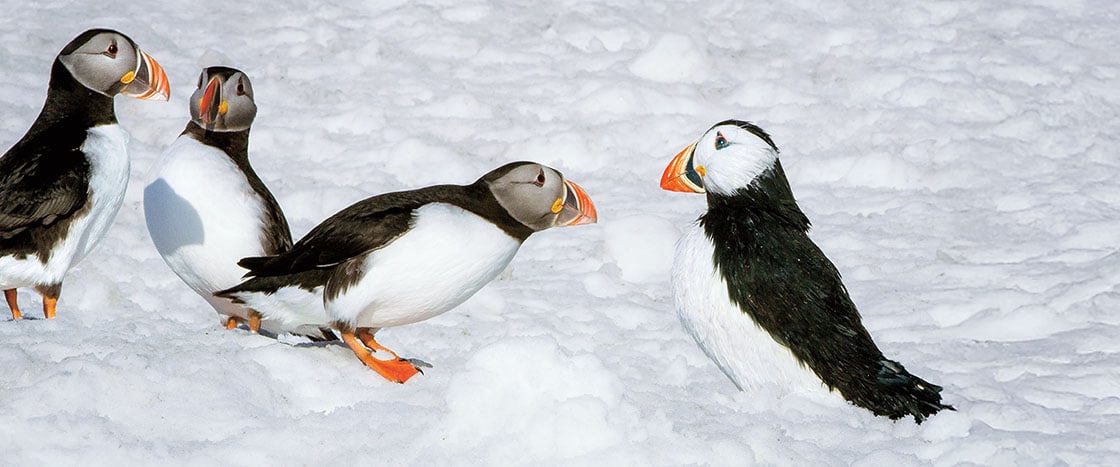
Can you tell which one?


WORD HUNT
In the article, find:
A small island in Norway is crowded with thousands of squawking seabirds called puffins. Some soar above the rocky cliffs. Others waddle across the snow. But one puffin is strangely still and quiet. The bird is the spitting image of any other puffin. But it isn’t a real puffin at all—it’s a robot spy.
Look more closely, and you’ll see the puffin’s eyes are actually tiny cameras. Its black-and-white feathers are glued on a plastic body filled with wires.
The puffin replica is on a mission: to take videos of real puffins in the wild.
A New View
To learn more about animals, scientists need to observe them in their natural homes. But that’s long been a challenge. When humans are near, most animals change the way they act or they run away in fear.
Cameras tied on trees or hidden in bushes have helped. But some scientists are now going one step further. They’re teaming up with a film company to place cameras inside robots that resemble real animals.
In addition to the robot puffin, the team has also made a robot penguin, gorilla, and crocodile to take videos of those animals in nature. The robots mimic real creatures so well that the animals feel comfortable around them—and behave naturally as a result.
Scientists watch these videos to learn more about animals in the wild. And you can watch them too! The film company posts the videos online for everyone to enjoy.
“We want as many people as possible to love wildlife like we do,” says Matthew Gordon, who helped make the robot puffin. (It’s the one to the right, by the way!)
PARAGRAPH POWER!
How can robots help scientists study animals?
This article was originally published in the February 2026 issue.
This article was originally published in the February 2026 issue.